


25.二叉树中序遍历
示例 1:
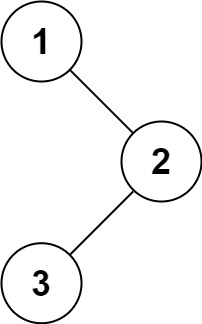
输入:root = [1,null,2,3]
输出:[1,3,2]
示例 2:
输入:root = []
输出:[]
示例 3:
输入:root = [1]
输出:[1]
题解:
class Solution {

  public List<Integer> inorderTraversal(TreeNode root) {
   List<Integer> res = new ArrayList();
   inorder(root,res);
   return res;
  }

  public void inorder(TreeNode root,List<Integer> res){
   if(root == null){
     return;
   }
   //这里灵活调整三行代码顺序就可以决定是前,中,后三种遍历顺序(前:将res.add(root.val)放到最前面,后:将res.add(root.val)放到最后面)
   inorder(root.left,res);
   res.add(root.val);
   inorder(root.right,res);
  }
}
26二叉树的最大深度
给定一个二叉树 root ,返回其最大深度。
二叉树的 最大深度 是指从根节点到最远叶子节点的最长路径上的节点数。
示例 1:
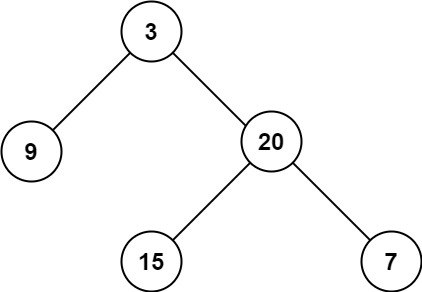
输入:root = [3,9,20,null,null,15,7]
输出:3
示例 2:
输入:root = [1,null,2]
输出:2
题解:
class Solution {

  public int maxDepth(TreeNode root) {
    if(root == null){
      return 0;
    }
    else{
      int leftHeight = maxDepth(root.left);
      int rightHeight = maxDepth(root.right);
      return Math.max(leftHeight,rightHeight) + 1;
    }
  }
}
27.翻转二叉树
给你一棵二叉树的根节点 root ,翻转这棵二叉树,并返回其根节点。
示例 1:
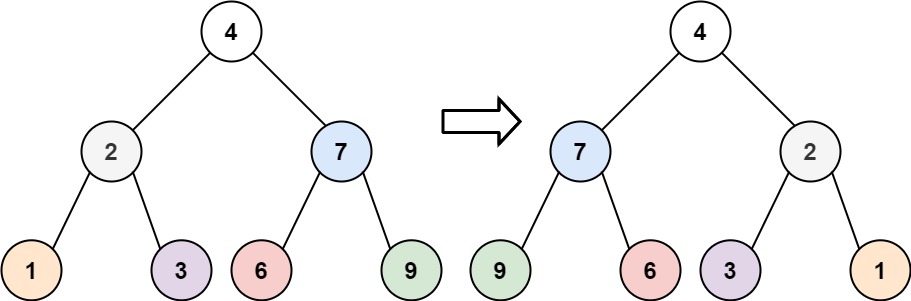
输入:root = [4,2,7,1,3,6,9]
输出:[4,7,2,9,6,3,1]
示例 2:
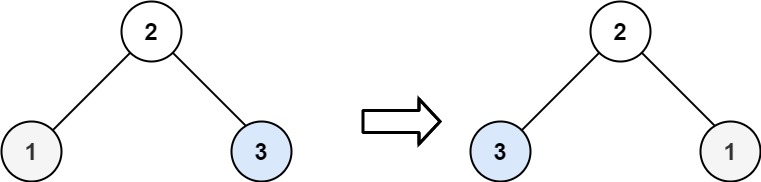
输入:root = [2,1,3]
输出:[2,3,1]
示例 3:
输入:root = []
输出:[]
题解:
class Solution {

  public TreeNode invertTree(TreeNode root) {
    if(root == null){
      return null;
    }
    TreeNode left = invertTree(root.left);
    TreeNode right = invertTree(root.right);
    root.left = right;
    root.right = left;
    return root;
  }
}
28.对称二叉树
给你一个二叉树的根节点 root , 检查它是否轴对称。
示例 1:
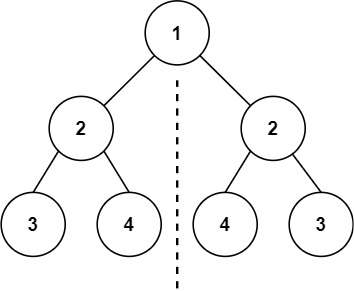
输入:root = [1,2,2,3,4,4,3]
输出:true
题解:
class Solution {

  public boolean isSymmetric(TreeNode root) {
   return check(root.left,root.right);
  }
  public boolean check(TreeNode p,TreeNode q){
   if(p == null && q== null){
     return true;
   }
   if(p == null || q == null){
     return false;
   }
   return p.val == q.val && check(p.left,q.right) && check(p.right,q.left);
  }
}
29.二叉树的半径
给你一棵二叉树的根节点,返回该树的 直径 。
二叉树的 直径 是指树中任意两个节点之间最长路径的 长度 。这条路径可能经过也可能不经过根节点 root 。
两节点之间路径的 长度 由它们之间边数表示。
示例 1:
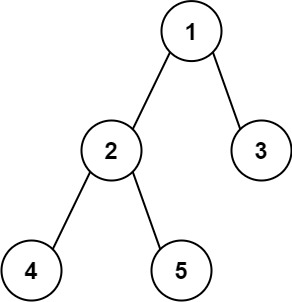
输入:root = [1,2,3,4,5]
输出:3
解释:3 ,取路径 [4,2,1,3] 或 [5,2,1,3] 的长度。
示例 2:
输入:root = [1,2]
输出:1
核心思想:
找到左右子树深度之和最大值
题解:
class Solution {
int ans;
public int diameterOfBinaryTree(TreeNode root) {
ans = 1;
depth(root);
return ans - 1;
}
public int depth(TreeNode root){
if(root == null){
return 0;
}
int L = depth(root.left);
int R = depth(root.right);
ans = Math.max(ans,L + R + 1);
return Math.max(L,R) + 1;
}
}30.二叉树层序遍历
给你二叉树的根节点 root ,返回其节点值的 层序遍历 。 (即逐层地,从左到右访问所有节点)。
示例 1:
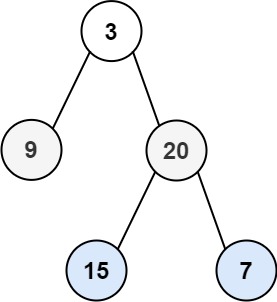
输入:root = [3,9,20,null,null,15,7]
输出:[[3],[9,20],[15,7]]
示例 2:
输入:root = [1]
输出:[[1]]
示例 3:
输入:root = []
输出:[]核心思想:
使用队列来对存储处理每一个节点保证按顺序处理节点,其次通过队列当前有的元素来判断当前层数有几个节点要处理。
题解:
class Solution {
    public List<List<Integer>> levelOrder(TreeNode root) {
        List<List<Integer>> ans = new ArrayList();
        if(root == null){
            return ans;
        }
        Queue<TreeNode> queue = new LinkedList();
        queue.offer(root);
        while(!queue.isEmpty()){
            List<Integer> level = new ArrayList();
            int currentLevel = queue.size();
            for(int i = 1; i <= currentLevel;i++){
                TreeNode node = queue.poll();
                level.add(node.val);
                if(node.left != null){
                    queue.offer(node.left);
                }
                if(node.right != null){
                    queue.offer(node.right);
                }
            }
            ans.add(level);
        }
        return ans;
    }
}
31.将有序数组转为二叉树
给你一个整数数组 nums ,其中元素已经按 升序 排列,请你将其转换为一棵 平衡 二叉搜索树。
示例 1:
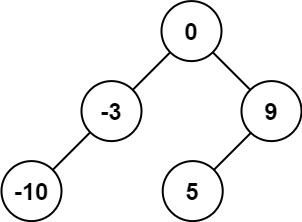
输入:nums = [-10,-3,0,5,9]
输出:[0,-3,9,-10,null,5]
解释:[0,-10,5,null,-3,null,9] 也将被视为正确答案:
示例 2:
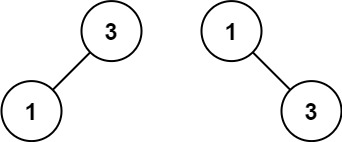
输入:nums = [1,3]
输出:[3,1]
解释:[1,null,3] 和 [3,1] 都是高度平衡二叉搜索树。
这道题相对简单,方法有很多种,这里就以中序遍历的其中一种方式来做。
题解:
通过中序遍历,选择中间位置左边的数字作为根节点
class Solution {

  public TreeNode sortedArrayToBST(int[] nums) {
     return helper(nums,0,nums.length - 1);
  }

  public TreeNode helper(int[] nums,int left,int right){
     if(left > right){
       return null;
     }
     int mid = (left + right + 1) / 2;
     TreeNode root = new TreeNode(nums[mid]);
     root.left = helper(nums,left,mid - 1);
     root.right = helper(nums,mid + 1,right);
     return root;
  }
}
32.验证二叉搜索树
给你一个二叉树的根节点 root ,判断其是否是一个有效的二叉搜索树。
有效 二叉搜索树定义如下:
节点的左子树只包含 严格小于 当前节点的数。
节点的右子树只包含 严格大于 当前节点的数。
所有左子树和右子树自身必须也是二叉搜索树。
示例 1:
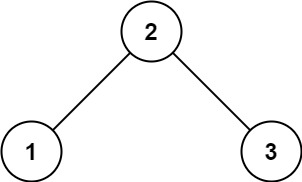
输入:root = [2,1,3]
输出:true
示例 2:
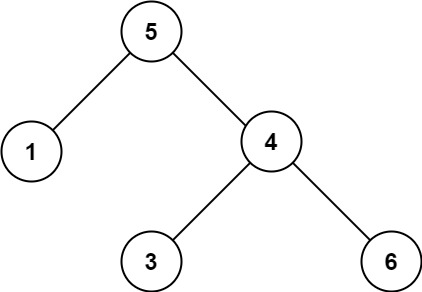
输入:root = [5,1,4,null,null,3,6]
输出:false
解释:根节点的值是 5 ,但是右子节点的值是 4 。
题解:
class Solution {

  public boolean isValidBST(TreeNode root) {
     return isValidBST(root,Long.MIN_VALUE,Long.MAX_VALUE);
  }
  public boolean isValidBST(TreeNode node,long lower,long higher){

     if(node == null){
       return true;
     }
     if(node.val <= lower || node.val >= higher){
       return false;
     }
     return isValidBST(node.left,lower,node.val) && isValidBST(node.right,node.val,higher);
  }
}
33.二叉搜索树查询倒数K个小的元素
给定一个二叉搜索树的根节点 root ,和一个整数 k ,请你设计一个算法查找其中第 k 小的元素(k 从 1 开始计数)。
示例 1:
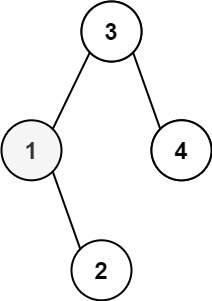
输入:root = [3,1,4,null,2], k = 1
输出:1
示例 2:
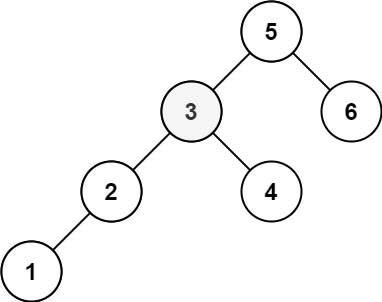
输入:root = [5,3,6,2,4,null,null,1], k = 3
输出:3
题解:
这题主要结合二叉搜索树的特点,因为我们要找的是偏小的一边,所以我们优先搜索左子树,将左子树的节点塞到栈里面,然后再k次出栈就可以找到第k小的节点
class Solution {
public int kthSmallest(TreeNode root, int k) {
Deque<TreeNode> stack = new ArrayDeque<>();
while(root != null || !stack.isEmpty()){
//优先搜索左子树
while(root != null){
stack.push(root);
root = root.left;
}
//出栈k次就能拿到第k小的节点
root = stack.pop();
--k;
//k==0则找到了直接中断
if(k == 0){
break;
}
//当最左端的左子树都找完没找到,那么就从子树节点的右子树节点开始,但后续搜索还是优先左子树搜索
root = root.right;
}
return root.val;
}
}34.二叉树右视图
给定一个二叉树的 根节点 root,想象自己站在它的右侧,按照从顶部到底部的顺序,返回从右侧所能看到的节点值。
示例 1:
输入:root = [1,2,3,null,5,null,4]
输出:[1,3,4]
解释:
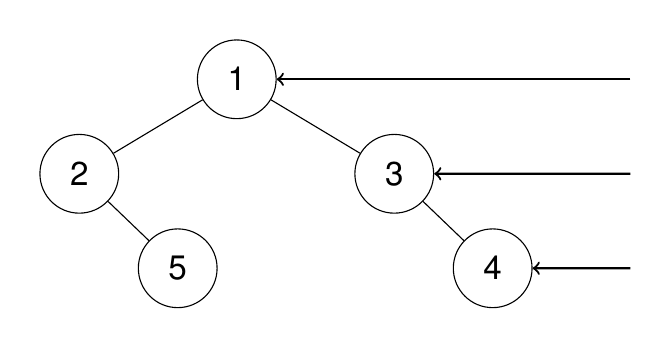
示例 2:
输入:root = [1,2,3,4,null,null,null,5]
输出:[1,3,4,5]
解释:
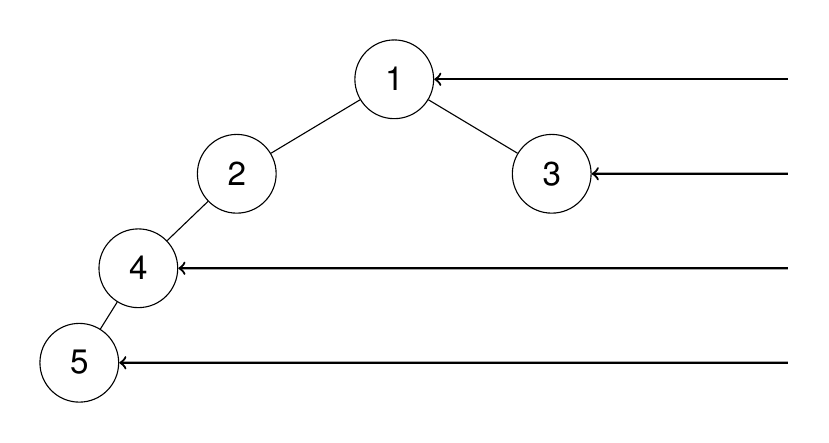
示例 3:
输入:root = [1,null,3]
输出:[1,3]
示例 4:
输入:root = []
输出:[]
题解:
这题我们用层序遍历即可,只往res数组添加每层的最后一个节点值即可。
class Solution {
public List<Integer> rightSideView(TreeNode root) {
List<Integer> ans = new ArrayList();
if(root == null){
return ans;
}
Deque<TreeNode> queue = new LinkedList<>();
queue.offer(root);
while(!queue.isEmpty()){
int size = queue.size();
while(size > 0){
TreeNode cur = queue.poll();
size--;
//只往结果数组添加最后一个元素,正常层序遍历没有这个if条件直接添加
if(size == 0){
ans.add(cur.val);
}
if(cur.left != null){
queue.offer(cur.left);
}
if(cur.right != null){
queue.offer(cur.right);
}
}
}
return ans;
}
}35.二叉树展开为链表
给你二叉树的根结点 root ,请你将它展开为一个单链表:
展开后的单链表应该同样使用
TreeNode,其中right子指针指向链表中下一个结点,而左子指针始终为null。展开后的单链表应该与二叉树 先序遍历 顺序相同。
示例 1:
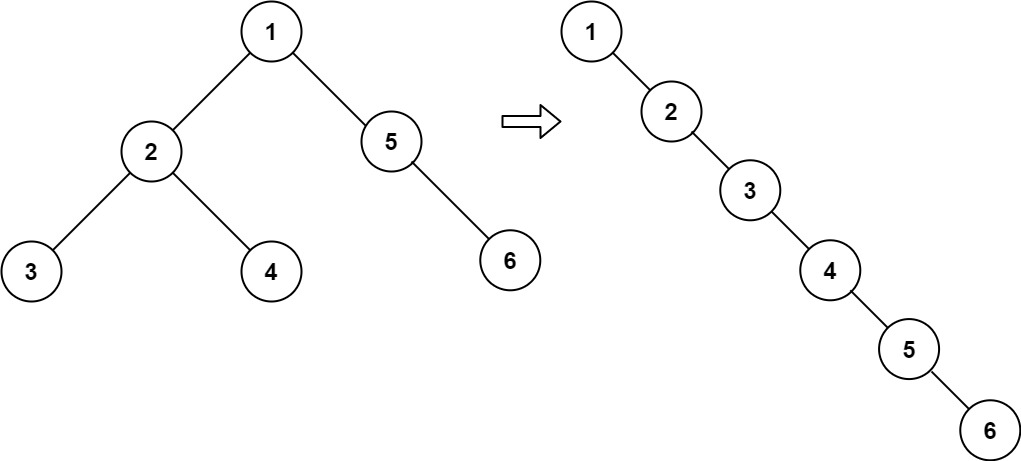
输入:root = [1,2,5,3,4,null,6]
输出:[1,null,2,null,3,null,4,null,5,null,6]
示例 2:
输入:root = []
输出:[]
示例 3:
输入:root = [0]
输出:[0]
题解:
这题用先序遍历把节点存到list里面,然后通过遍历list访问节点来改变节点的指针,for循环 i 初始记得设为1
class Solution {
public void flatten(TreeNode root) {
List<TreeNode> list = new ArrayList();
preorder(root,list);
int size = list.size();
//i索引指向当前子树的左节点,i-1就是根节点
for(int i = 1;i < size;i++){
TreeNode prev = list.get(i - 1), curr = list.get(i);
prev.left = null;
prev.right = curr;
}
}
public void preorder(TreeNode root,List<TreeNode> list){
if(root != null){
list.add(root);
preorder(root.left,list);
preorder(root.right,list);
}
}
}36.从先序与中序遍历序列构造二叉树
给定两个整数数组 preorder 和 inorder ,其中 preorder 是二叉树的先序遍历, inorder 是同一棵树的中序遍历,请构造二叉树并返回其根节点。
示例 1:
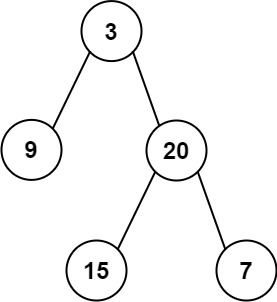
输入: preorder = [3,9,20,15,7], inorder = [9,3,15,20,7]
输出: [3,9,20,null,null,15,7]
示例 2:
输入: preorder = [-1], inorder = [-1]
输出: [-1]
题解:
做这题要先找到两个遍历的特性
前序遍历:根 → 左子树 → 右子树,所以
preorder[0]一定是整棵树的根。中序遍历:左子树 → 根 → 右子树,所以只要在中序数组中找到根的位置,就能把左、右子树的中序区间分开。
用一个指针 inorderIndex 指向中序遍历中「当前应该被匹配」的位置。
遍历前序数组 preorder,依次处理每个节点:
如果栈顶节点的值 ≠ inorder[inorderIndex]
说明当前前序节点是栈顶节点的左孩子。
因为前序是「根→左」,只要还没走到中序里的根,就一直在往左走。
于是
node.left = new TreeNode(preorderVal),并压栈。
如果栈顶节点的值 == inorder[inorderIndex]
说明栈顶这个节点已经没有左子树了(中序里它的左边都处理完了)。
于是不断弹出栈顶,并让
inorderIndex++,直到栈顶节点不等于inorder[inorderIndex]或者栈空。此时最后弹出的那个节点,它的右孩子就是当前前序节点。
于是
node.right = new TreeNode(preorderVal),并压栈。
把前序和中序对照看:
前序:
3, 9, 20, 15, 7中序:
9, 3, 15, 20, 7
过程模拟:
若
preorder为空,返回null。用
preorder[0]创建根节点root,压入栈。inorderIndex = 0。从
i = 1遍历preorder:取当前值
preorderVal,查看栈顶node。若
node.val != inorder[inorderIndex]:当前节点是
node的左孩子,创建并压栈。
否则:
不断弹出栈顶,同时
inorderIndex++,直到栈空或栈顶值不等于inorder[inorderIndex]。最后弹出的节点
node的右孩子就是当前节点,创建并压栈。
返回
root。
代码:
class Solution {
public TreeNode buildTree(int[] preorder, int[] inorder) {
if(preorder == null || preorder.length == 0){
return null;
}
TreeNode root = new TreeNode(preorder[0]);
Deque<TreeNode> stack = new LinkedList<TreeNode>();
stack.push(root);
int inorderIndex = 0;
for(int i = 1;i < preorder.length;i++){
int preorderVal = preorder[i];
TreeNode node = stack.peek();
if(node.val != inorder[inorderIndex]){
node.left = new TreeNode(preorderVal);
stack.push(node.left);
} else{
while(!stack.isEmpty() && stack.peek().val == inorder[inorderIndex]){
node = stack.pop();
inorderIndex++;
}
node.right = new TreeNode(preorderVal);
stack.push(node.right);
}
}
return root;
}
}37.路径总和
给定一个二叉树的根节点 root ,和一个整数 targetSum ,求该二叉树里节点值之和等于 targetSum 的 路径 的数目。
路径 不需要从根节点开始,也不需要在叶子节点结束,但是路径方向必须是向下的(只能从父节点到子节点)。
示例 1:
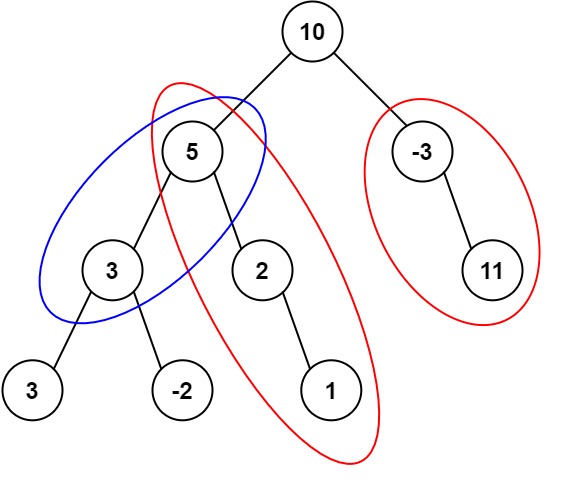
输入:root = [10,5,-3,3,2,null,11,3,-2,null,1], targetSum = 8
输出:3
解释:和等于 8 的路径有 3 条,如图所示。
示例 2:
输入:root = [5,4,8,11,null,13,4,7,2,null,null,5,1], targetSum = 22
输出:3
题解:
这题的要求其实很眼熟阿,在一个数据结构找到targetSum,对于这种问题我们可以使用前缀和,写起来简单还快。
class Solution {
public int pathSum(TreeNode root, int targetSum) {
Map<Long,Integer> prefix = new HashMap<Long,Integer>();
prefix.put(0L,1);
return dfs(root,prefix,0,targetSum);
}
public int dfs(TreeNode root,Map<Long,Integer> prefix,long curr,int targetSum){
if(root == null){
return 0;
}
int ret = 0;
curr += root.val;
ret = prefix.getOrDefault(curr - targetSum,0);
prefix.put(curr, prefix.getOrDefault(curr, 0) + 1);
ret += dfs(root.left,prefix,curr,targetSum);
ret += dfs(root.right,prefix,curr,targetSum);
prefix.put(curr,prefix.getOrDefault(curr,0) - 1);
return ret;
}
}38.二叉树的最近公共祖先
给定一个二叉树, 找到该树中两个指定节点的最近公共祖先。
百度百科中最近公共祖先的定义为:“对于有根树 T 的两个节点 p、q,最近公共祖先表示为一个节点 x,满足 x 是 p、q 的祖先且 x 的深度尽可能大(一个节点也可以是它自己的祖先)。”
示例 1:
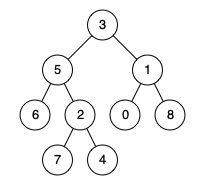
输入:root = [3,5,1,6,2,0,8,null,null,7,4], p = 5, q = 1
输出:3
解释:节点 5 和节点 1 的最近公共祖先是节点 3 。
示例 2:
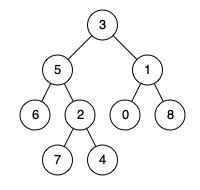
输入:root = [3,5,1,6,2,0,8,null,null,7,4], p = 5, q = 4
输出:5
解释:节点 5 和节点 4 的最近公共祖先是节点 5 。因为根据定义最近公共祖先节点可以为节点本身。
示例 3:
输入:root = [1,2], p = 1, q = 2
输出:1
题解:
这题通过遍历二叉树存储父节点,用map存储,用子节点的值为key,父节点为值,这样就能通过子节点拿到父节点。再定义一个记录是否访问过的visited数组来做标记。
class Solution {
Map<Integer, TreeNode> parent = new HashMap<Integer, TreeNode>();
Set<Integer> visited = new HashSet<Integer>();
public void dfs(TreeNode root){
if(root.left != null){
parent.put(root.left.val,root);
dfs(root.left);
}
if(root.right != null){
parent.put(root.right.val,root);
dfs(root.right);
}
}
public TreeNode lowestCommonAncestor(TreeNode root, TreeNode p, TreeNode q) {
dfs(root);
while(p != null){
visited.add(p.val);
p = parent.get(p.val);
}
while(q != null){
if(visited.contains(q.val)){
return q;
}
q = parent.get(q.val);
}
return null;
}
}39二叉树路径和最大值
二叉树中的 路径 被定义为一条节点序列,序列中每对相邻节点之间都存在一条边。同一个节点在一条路径序列中 至多出现一次 。该路径 至少包含一个 节点,且不一定经过根节点。
路径和 是路径中各节点值的总和。
给你一个二叉树的根节点 root ,返回其 最大路径和 。
示例 1:
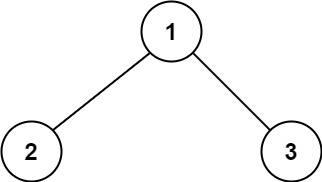
输入:root = [1,2,3]
输出:6
解释:最优路径是 2 -> 1 -> 3 ,路径和为 2 + 1 + 3 = 6
示例 2:
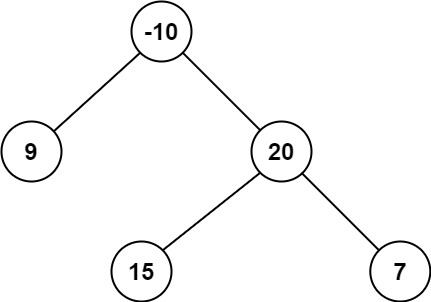
输入:root = [-10,9,20,null,null,15,7]
输出:42
解释:最优路径是 15 -> 20 -> 7 ,路径和为 15 + 20 + 7 = 42
题解:
这道题在困难里面属于萝莉,简单通过递归计算每一个子树的路径和,然后通过max找最大就行了。注意树节点的值是可以为负数的,所以maxsum不能初始化为0,否则在max判断一直会是0.
class Solution {
//初始化为整形最小值防止负值的路径和
int maxSum = Integer.MIN_VALUE;
public int maxPathSum(TreeNode root) {
maxGain(root);
return maxSum;
}
public int maxGain(TreeNode node){
if(node == null){
return 0;
}
int leftGain = Math.max(maxGain(node.left),0);
int rightGain = Math.max(maxGain(node.right),0);
int priceNewpath = node.val + leftGain + rightGain;
maxSum = Math.max(maxSum,priceNewpath);
return node.val + Math.max(leftGain,rightGain);
}
}
二叉树章节算法思想总结
本章 15 题(第 25 ~ 39 题)可以概括成一句话:二叉树的题,九成是「先选一种遍历顺序,再决定这一步该干什么」。
一、三种基本遍历骨架
1. 递归 DFS(前 / 中 / 后序只差一行的位置)
void traverse(TreeNode root) {
  if (root == null) {
    return;                // 终止条件
  }
  // 1. 前序位置:刚进入节点时执行
  traverse(root.left);
  // 2. 中序位置:左子树处理完之后执行
  traverse(root.right);
  // 3. 后序位置:子树全部处理完之后执行
}
2. 迭代中序(显式栈)
Deque<TreeNode> stack = new ArrayDeque<>();
while (root != null || !stack.isEmpty()) {
  while (root != null) {
    stack.push(root);      // 一路向左压栈
    root = root.left;
  }
  root = stack.pop();      // 弹栈 = 访问当前最小的节点
  root = root.right;       // 转向右子树,重复上述过程
}
3. 层序 BFS(队列 + 分层快照)
Deque<TreeNode> queue = new LinkedList<>();
queue.offer(root);
while (!queue.isEmpty()) {
  int size = queue.size();   // 关键:先快照本层节点数
  while (size-- > 0) {
    TreeNode cur = queue.poll();
    // 处理 cur
    if (cur.left != null) {
      queue.offer(cur.left);
    }
    if (cur.right != null) {
      queue.offer(cur.right);
    }
  }
}二、递归解题三要素与「前序位置 / 后序位置」
写树递归只问三件事:
函数语义:这个函数返回什么?(「子树最大深度」/「两棵子树是否互为镜像」/「最大单侧增益」)
终止条件:什么时候可以直接返回?(通常是
root == null)单层逻辑:拿到子问题的结果后,当前节点要做什么?
位置决定思路:
口诀:往下带约束用前序,往上要答案用后序。
三、题型分类与套路对照表
四、三个高频通用模板
模板 A:后序汇总 + 全局答案(26 / 29 / 39)
int ans = <合适的初值>;              // 39 题必须是 Integer.MIN_VALUE

int dfs(TreeNode node) {
  if (node == null) {
    return 0;                        // 子问题答案(空节点)
  }
  int left = dfs(node.left);
  int right = dfs(node.right);
  ans = Math.max(ans, <用 left、right 拼出的完整答案>);  // 结算"以当前节点为拐点"
  return <只能选一侧的值>;            // 向上汇报,不能分叉
}
模板 B:自顶向下带状态 + 回溯撤销(32 / 37)
void dfs(TreeNode node, <状态参数>) {
  if (node == null) {
    return;
  }
  <进入节点:更新状态 / 登记前缀和>
  <结算答案>
  dfs(node.left, <新状态>);
  dfs(node.right, <新状态>);
  <离开节点:撤销状态(回溯)>
}
模板 C:中序有序性的三种用法(31 / 33 / 36)
// 升序数组 → 平衡 BST:中点即根
TreeNode build(int[] nums, int l, int r) {
  if (l > r) {
    return null;
  }
  int mid = l + (r - l) / 2;
  TreeNode root = new TreeNode(nums[mid]);
  root.left = build(nums, l, mid - 1);
  root.right = build(nums, mid + 1, r);
  return root;
}
中序是 BST 的「排序视图」:建树用它(31)、找第 k 小用它(33)、还原结构也用它(36)。